• F3
  • F1
  • F4
  • F2

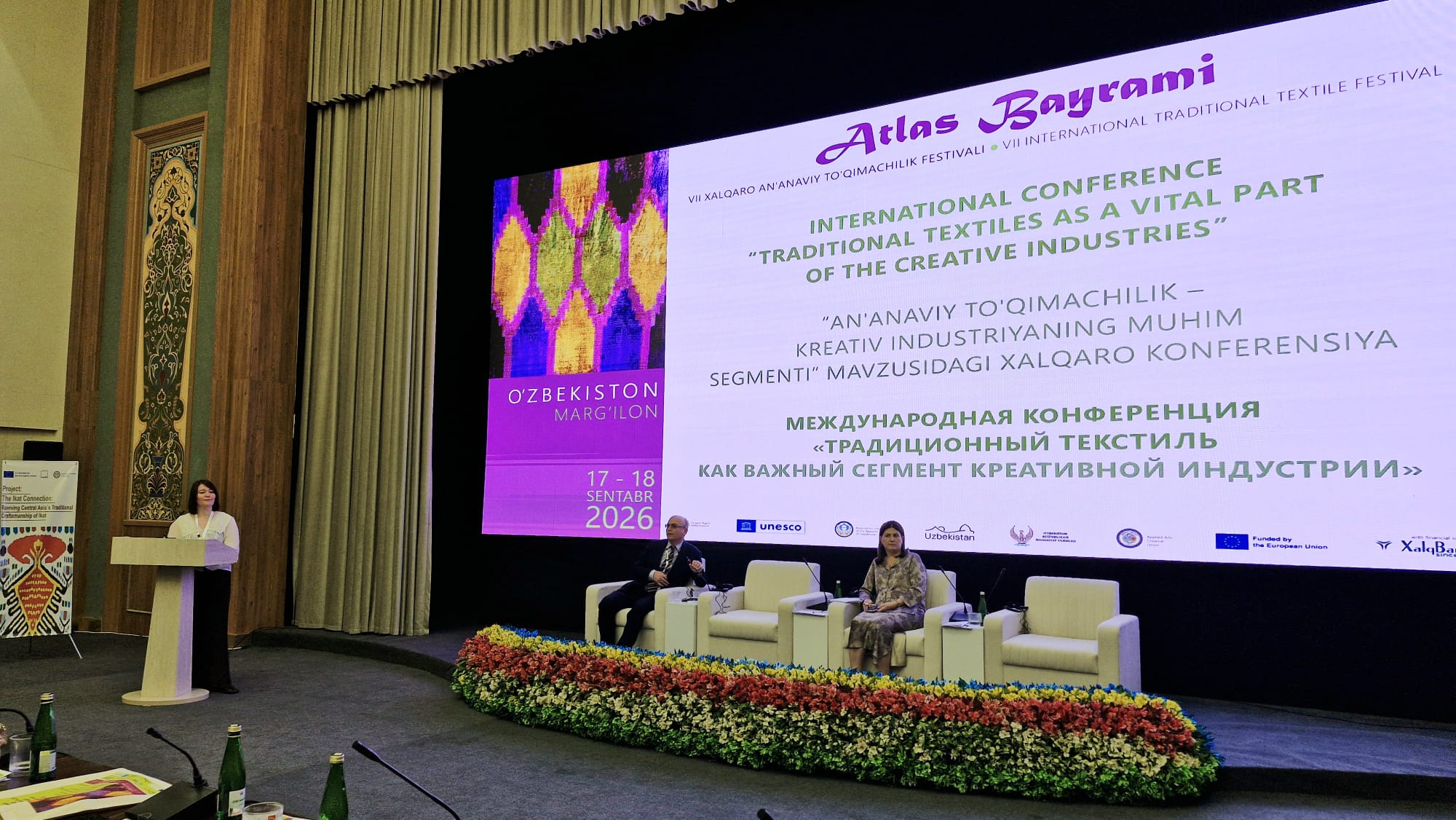
(by Augusta de Gunzbourg, TRC curator and education manager, 25 September 2026). The TRC was invited recently to attend "Atlas Bayrami", the 7th International Traditional Textile Festival, held in Margilan in the Fergana Valley, in the east of Uzbekistan. I attended the festival as TRC's representative. The event celebrated the country's textile traditions, and in particular the traditional silk ikats of this region. This extraordinary invitation was a chance to represent the TRC at an international conference and to better understand a textile history that is still very much alive in the valley and across the country.

The author speaking during the conference.The author speaking during the conference.

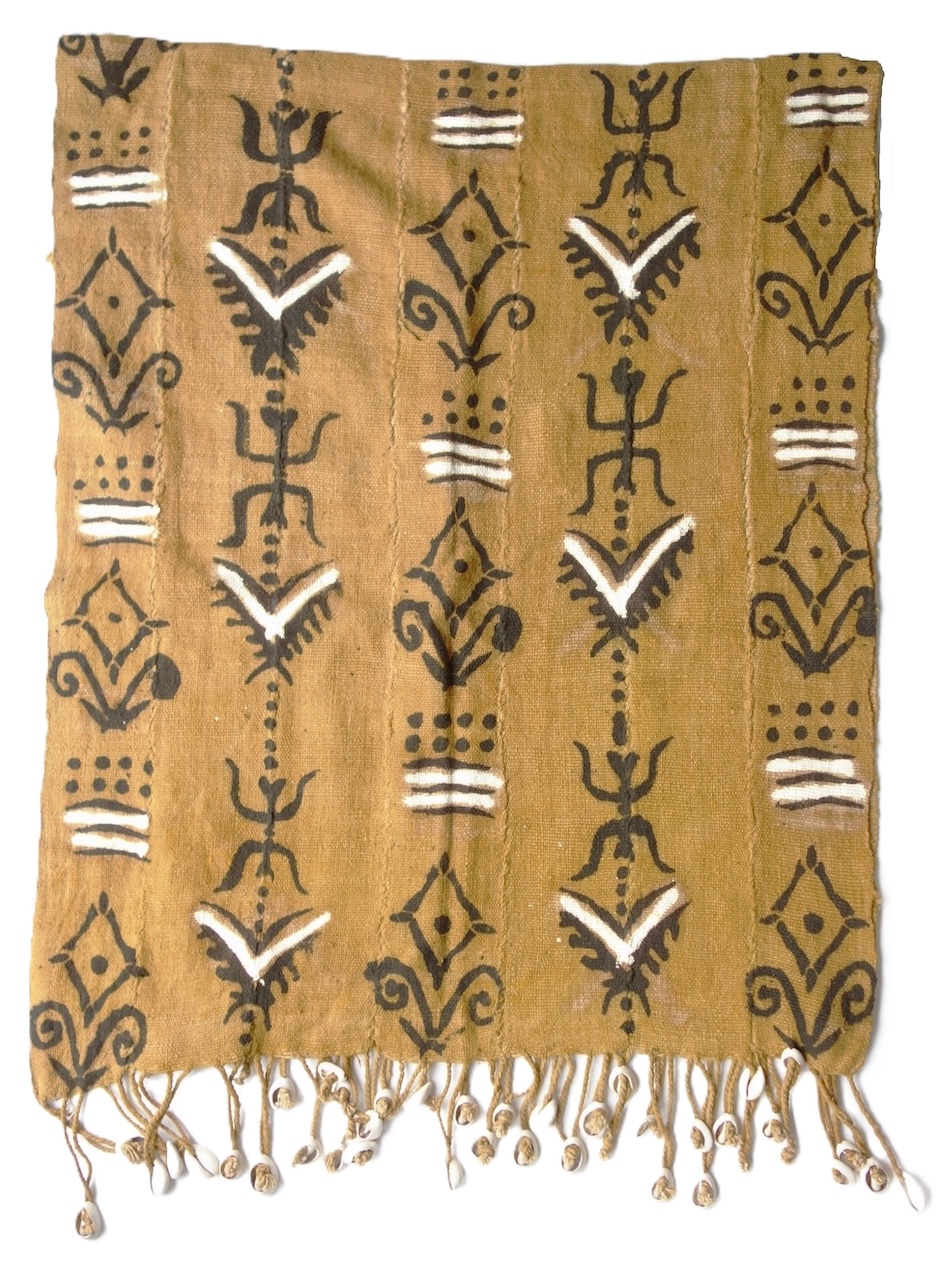
Length of cloth made from strips (15 cm) of woven cotton, dyed brown and then painted with various motifs. The fringes are decorated with white cowrie shells. Mali? (TRC 2026.2254).Length of cloth made from strips (15 cm) of woven cotton, dyed brown and then painted with various motifs. The fringes are decorated with white cowrie shells. Mali? (TRC 2026.2254).(Gillian Vogelsang, 28 September 2026) It is noticeable, since we moved to our new home on the Boerhaavelaan, that we have been increasing our international links and connections. We are welcoming more and more visitors from all over the world – just the other day we had a guest from China wanting to know what we did, while upstairs a researcher from Indonesia was looking at part of our Indonesian batik collection. We have also recently had several visitors from Iran as well as the USA and Canada, not to mention home-grown visitors from The Netherlands. We also currently have interns and student volunteers from Belgium, Lithuania, and Korea (she is studying Indonesian textiles) all adding to the international mix at the TRC.

Textile fellowships

Thanks to the generous help of the Gieskes-Strijbis Foundation, Amsterdam, the TRC has a three-year fellowship programme for the study of textiles and dress, based on the TRC Collection. The first fellow, Flora Kovacs Wester, is Hungarian, lives in The Netherlands and carries out research on  kasuri, a Japanese resist-dyeing technique. Earlier this year we announced a second round of fellowships and there were 39 applicants from literally all over the world. We appointed two junior fellows and one senior fellow, who will be working on different aspects of the TRC Collection. We hope to welcome them within a few weeks. These fellowships are certainly causing ripples in the textile world. The third round of fellowships will be announced shortly and we expect even more interest in this fellowship programme.

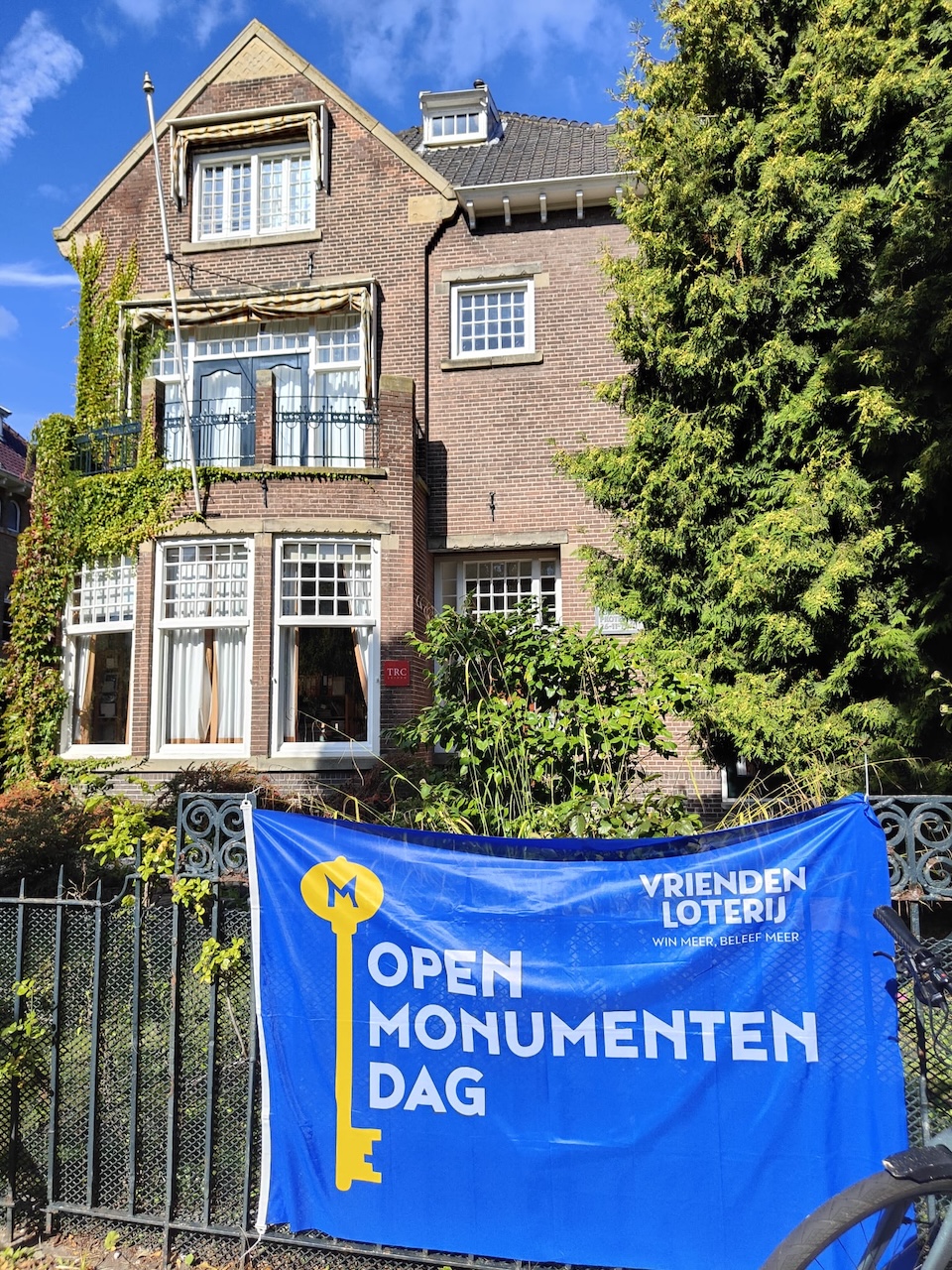
We have just had the second Open Monumenten Dagen (OMD) day (Sunday, 13 September), which was from 10.00 until 17.00 and we are all very, very tired! I am glad that the OMD is only once a year, but it is well worth it for getting people interested in what the TRC is doing and why.

Yesterday we had 111 visitors and today 214 people came to see Boerhaavelaan 6 (B6), giving a total of 325 over the weekend. Again there were people who live on the street or nearby, who were simply curious about the building and the family who had lived there for over 100 years. Many people came for the architectural history of the building, while others came for the textiles and to see what the TRC is and is doing.

There were five TRC volunteers present and we all had a chance to talk with visitors, answer questions, and help with the shop, so plenty of opportunities to tell everyone about what we are doing and why. In addition we were able to talk with teachers from here in Leiden, people from Leiden Council, as well as others working with local commercial groups. In other words, a great opportunity for people to see the TRC in action and its potential as a local and international centre for textile and dress studies.

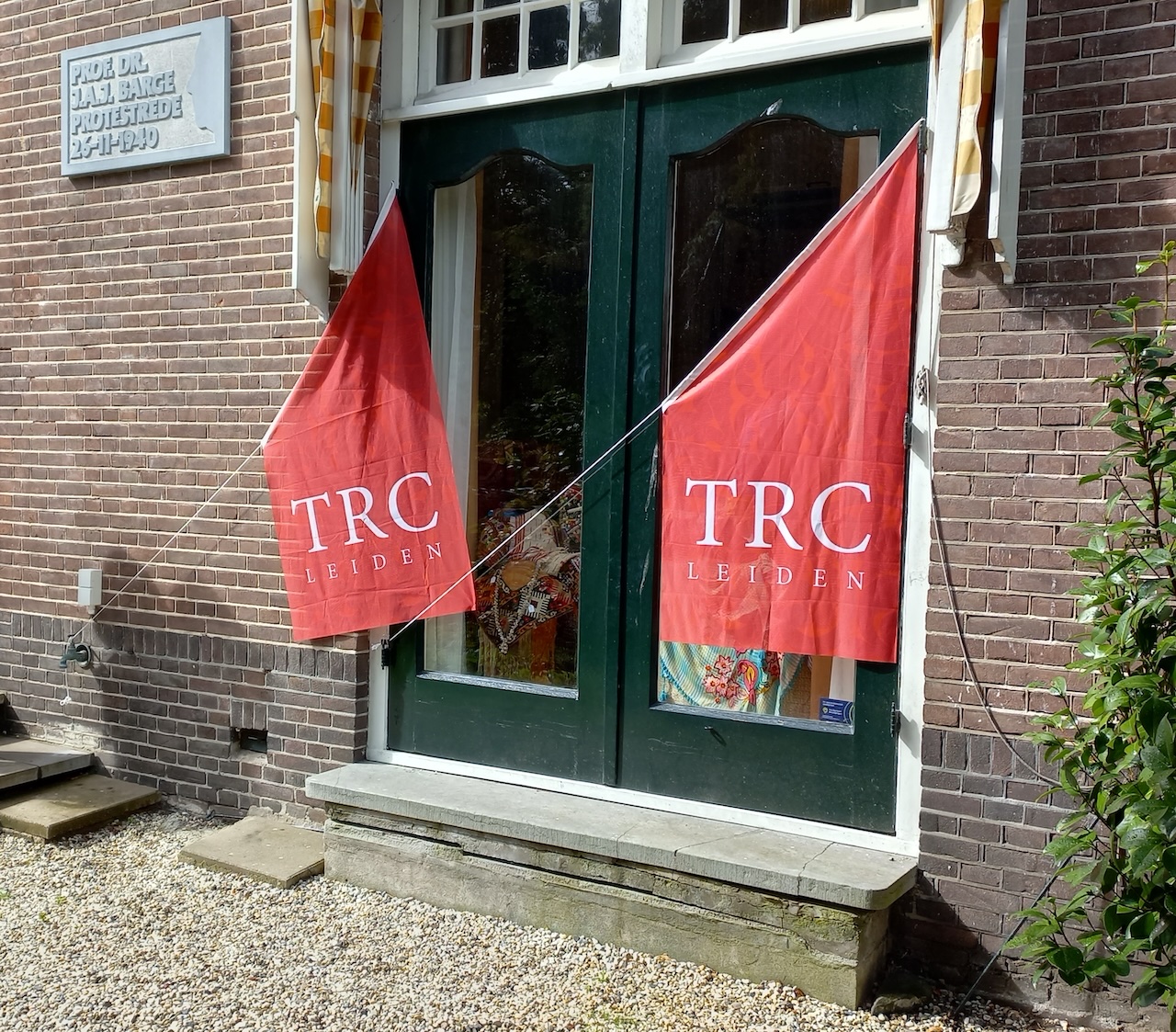
Boerhaavelaan 6Boerhaavelaan 6(Gillian Vogelsang, 12 September) We have finished our first day of the Open Monument Weekend (Open Monumentendagen), which is a national event where people can come and look at various forms of monumental buildings, from factories to cathedrals, via churches and castles. Not to mention, public and private buildings of various types and ages.

The TRC was opened last year and we agreed to be open again this year, as it is a great way for people to see the building (Boerhaavelaan 6) and to learn about the TRC and what we are doing. Today we were open from 12.00 until 17.00 and we had over 100 visitors. The first, actually came at 10.30 as the banner was in situ and the door open!

There was a constant flow of visitors from 11.30 onwards. Most people came to see the building, for example, there were some who had lived on or near the Boerhaavelaan and simply wanted to see what the house looked like on the inside. Others were interested in the architect, Jesse, who was involved in building both the house and its extension.

But there was an equal number who had heard about the TRC via the local newspapers, online (especially LinkedIn), etc., and wanted to learn more about what we are doing and why. The shop was open and many items sold to visitors, another way of helping to support the TRC! Various people took the new TRC brochure with the promise to make a donation. There were also a number of people who are now seriously thinking about becoming a volunteer and helping with the day-to-day running of the TRC.

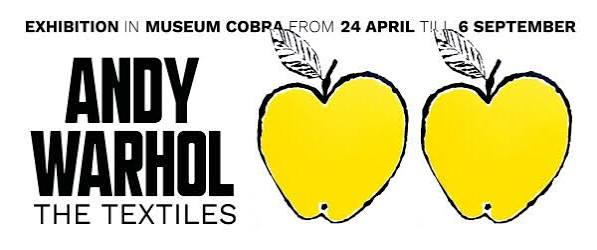
Poster for the Andy Warhol exhibition, now extended until 8 November. Museum Cobra, Sandbergplein 1, Amstelveen.Poster for the Andy Warhol exhibition, now extended until 8 November. Museum Cobra, Sandbergplein 1, Amstelveen.(Loren Mealey, 6 September 2026). Until Sunday, 8 November 2026, Museum Cobra in Amstelveen in The Netherlands presents an exhibition with the title 'Andy Warhol, The Textiles'. TRC friend and volunteer, Loren Mealey, went to see the exhibition in Amstelveen and she wrote the following blog:

When we think of Andy Warhol, we think of Campbell’s Soup Cans, Coca-Cola bottles, Marilyn Monroe and the bright, bold world of Pop Art. Before all of that, though, Warhol was illustrating something quite different: textiles.
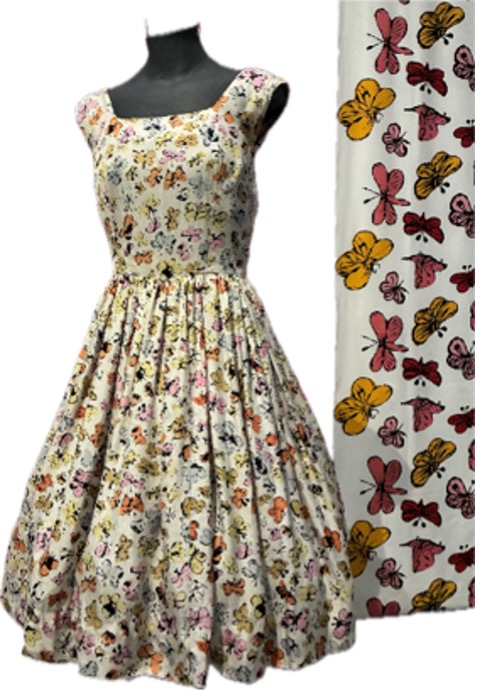
Left: “Happy Butterfly Day”. Printed silk, circa 1955-56. Manufacturer unknown; Right:  “Large Butterflies”. Printed cotton, circa 1955-56.  D. B. Fuller & Co., Inc.Left: “Happy Butterfly Day”. Printed silk, circa 1955-56. Manufacturer unknown; Right: “Large Butterflies”. Printed cotton, circa 1955-56. D. B. Fuller & Co., Inc.In the 1950s and early 1960s, long before he became one of the most recognisable artists of the twentieth century, Warhol was a successful commercial illustrator and graphic designer in New York City. He created playful textile patterns filled with ice-cream cones, candy apples, lemons, butterflies, flowers, pretzels, shoes, buttons and even circus clowns. They are cheerful, whimsical and unmistakably of their time. If observed closely, you can already see the beginnings of the Warhol we know today.

What is particularly appealing about these designs is their colourful combination of simplicity and repetition. Warhol took an ordinary object, reduced it to its essential shape, and then repeated it across the fabric. The same butterfly might appear again and again, but each one will show a tiny difference. A line shifts. A shape changes slightly. A colour lands differently.

Then there is the line. Warhol had developed his distinctive “blotted line” technique while still a student and refined it during his years as a commercial illustrator. The process was quite simple. He traced an image in ink on a non-absorbent sheet and then pressed it against another sheet of paper, transferring the ink. The result was a broken, slightly uneven line: part drawing, part print.
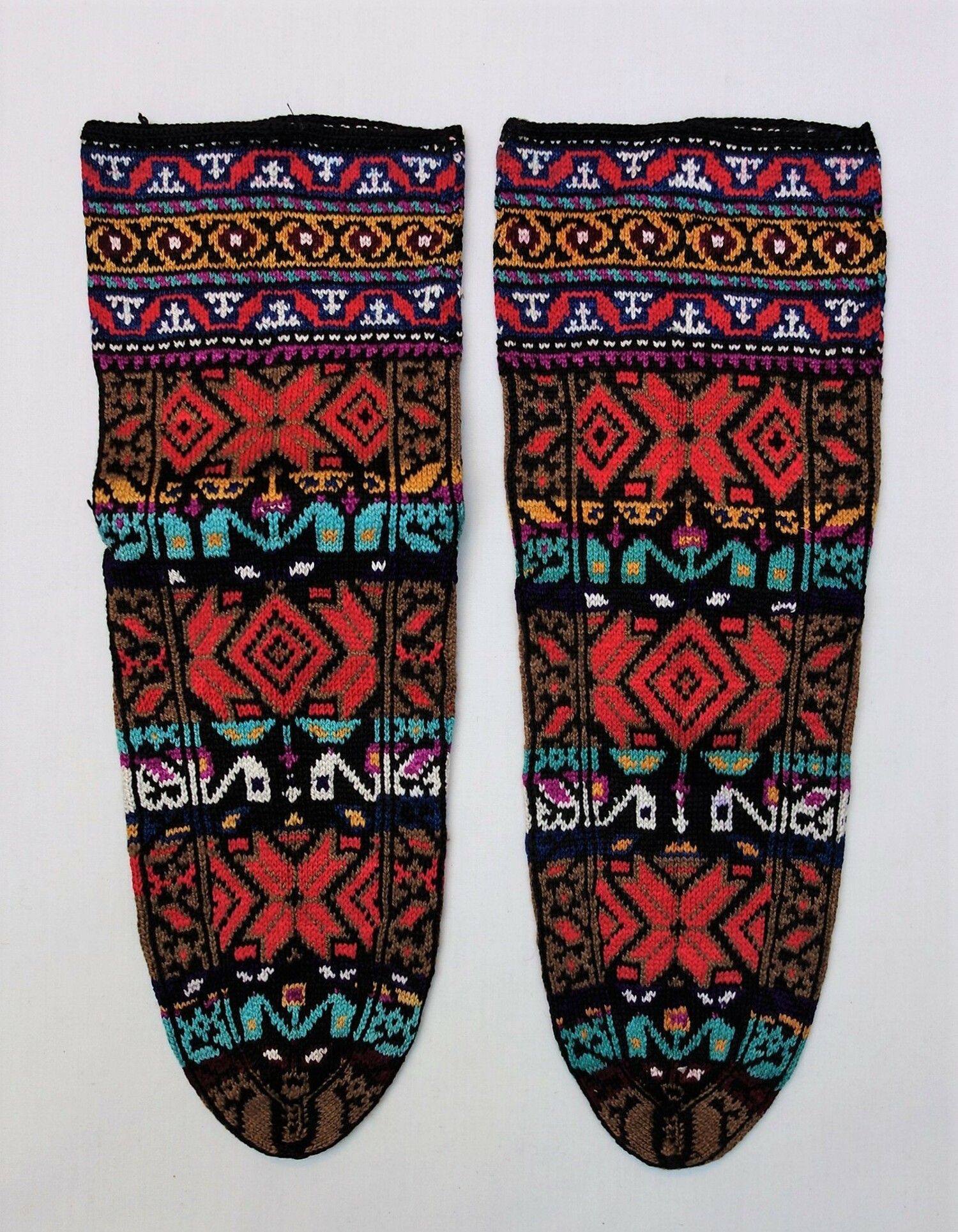
Fig. 1. Late-19th century, silk, knitted socks from Iran (TRC 2002.0078a b).Fig. 1. Late-19th century, silk, knitted socks from Iran (TRC 2002.0078a b).(Nader Sayadi, 5 August 2026) The Textile Research Centre (TRC) holds a significant and growing collection of textiles from the Islamic world. In June 2026, I had the chance to study a few examples from its Iranian Regional Dress collection, a large group of specimens that the TRC collected in Iran between 1998 and 2001.

This collection showcases some of the attire commonly worn in Iran at the turn of the millennium. Many of the garments are an adaptation of older styles, and therefore often known as living “folk” or “traditional” attire.

Other Iranian textiles and garments that are housed at the TRC, such as the donated Bayani Family Collection, include garments and accessories from the mid-nineteenth to the early twentieth century (Fig. 1).

While a few museums have collected nineteenth-century textiles and garments, there has generally been little interest in acquiring, studying, and interpreting recently made textiles and attire in “folk” style. As a result, such textiles are not easily accessible to researchers outside of Iran.

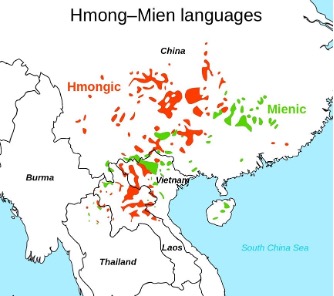
Fig. 1. Distribution of the Hmong–Mien language family. The Hmongic branch (Miao people) is shown in red. Retrieved from: https://tinyurl.com/bp92pmb8.Fig. 1. Distribution of the Hmong–Mien language family. The Hmongic branch (Miao people) is shown in red. Retrieved from: https://tinyurl.com/bp92pmb8.(Frieda Chen, 1 August 2026) The TRC houses a collection of more than 280 objects related to the Miao people of China. As part of a recent mini exhibition at the TRC, a selection of these objects was brought together to explore Miao dress traditions. The following blog article introduces both the exhibition objects and additional Miao-related objects from the TRC collection, together with an overview of Miao’s textile traditions.

Introduction of Miao people and Miao sartorial traditions

The Miao are one of the largest ethnic minority groups in China and are also distributed across Southeast Asia, including Vietnam, Laos, and Thailand (Fig. 1). Repeated migrations in history have caused numerous Miao communities living in different regions. As a result, many local styles of dress developed. Although the exact number of Miao clothing styles remains uncertain, previous studies have recorded at least 173 distinct styles of Miao clothing in China, reflecting the diversity of regional Miao communities (Wu et al., 2000; Zhang, 2004).

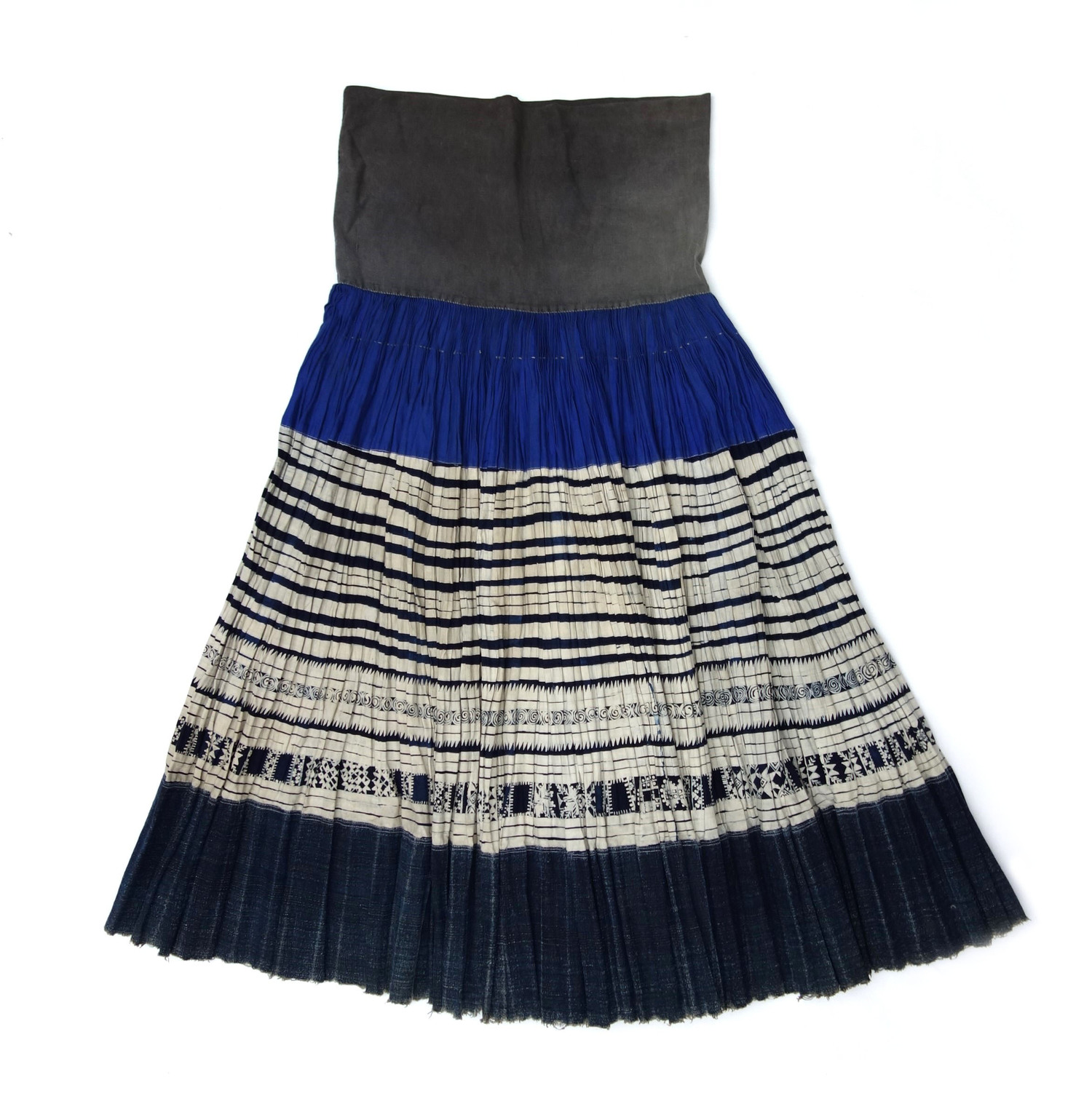
Fig. 2. Pleated, cotton and silk skirt with batik-dyed decoration. Guizhou, Ertang Miao, China, 20th century (TRC 2024.2742).Fig. 2. Pleated, cotton and silk skirt with batik-dyed decoration. Guizhou, Ertang Miao, China, 20th century (TRC 2024.2742).

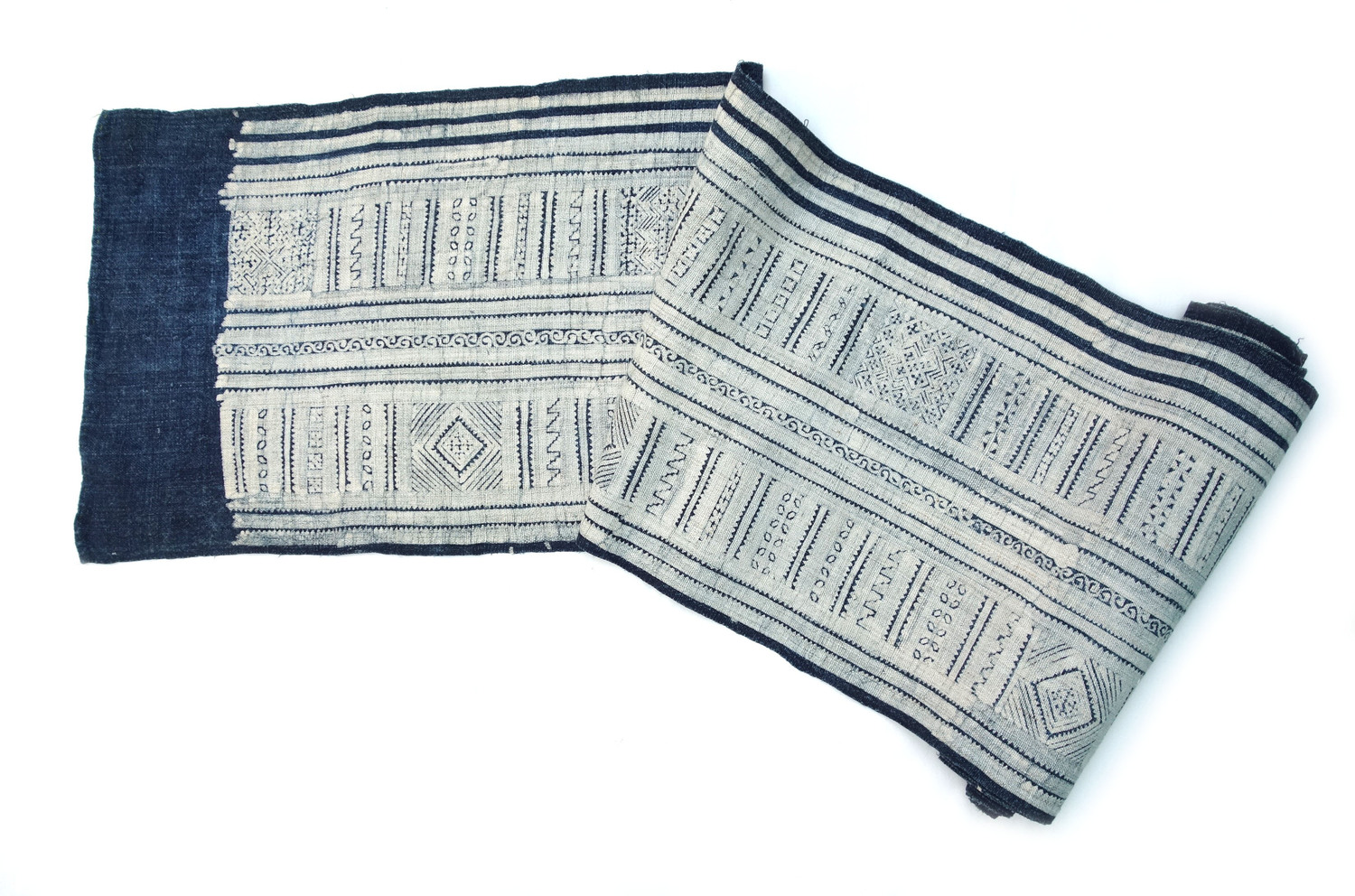
Fig. 3. Dyed skirt length, bast fibre with hand-woven batik decoration. Miao, China, 20th century (TRC 2024.2719).Fig. 3. Dyed skirt length, bast fibre with hand-woven batik decoration. Miao, China, 20th century (TRC 2024.2719).

(Gillian Vogelsang, 2 August 2026) For the next six months or so we will be working hard on cataloguing, photographing and adding more details about the large Turkish and Turkish/Ottoman collection that was donated to the TRC by Jean-Marie Criel and Jos De Vrindt in Antwerp, Belgium. It is now gradually being transferred to Leiden and included in the TRC collection. So far we have added over 1100 items to the TRC database and there are (many) more entries and stories to come! To date, the TRC published four blogs on the subject.

Why did we accept this collection? There are various reasons, firstly, because we have long been building up the TRC’s collection  of regional dress from the Islamic world (see comments about the Iranian collection in another blog). For historical and indeed modern reasons, Türkiye (Turkey) is an important country, both within the Islamic world and elsewhere.

Fig. 1. Women’s kaftan from Konya, early 20th century (TRC 2025.0799b).Fig. 1. Women’s kaftan from Konya, early 20th century (TRC 2025.0799b).

Search in the TRC website

Contact

Boerhaavelaan 6
2334 EN Leiden.
Tel. +31 (0)71 5134144 (office hours)  
office@trcleiden.org 

The TRC is open every week-day from 10.00 to 15.00

facebook 2015 logo detail 

instagram vernieuwt uiterlijk en logo


Bank account number

NL39 INGB 0002 9823 59, in the name of the Stichting Textile Research Centre.

Donations

The TRC is dependent on project support and individual donations. All of our work is being carried out by volunteers. To support the TRC activities, we therefore welcome your financial assistance: donations can be transferred to bank account number (IBAN) NL39 INGB 000 298 2359, in the name of the Stichting Textile Research Centre. BIC code is: INGBNL2A.

 You can also, very simply, if you have an iDEAL app, use the iDEAL button and fill in the amount of support you want to donate: 


Since the TRC is officially recognised as a non-profit making cultural institution (ANBI), donations are tax deductible for 125% for individuals, and 150% for commercial companies. For more information, click here